

MASTER CLASS
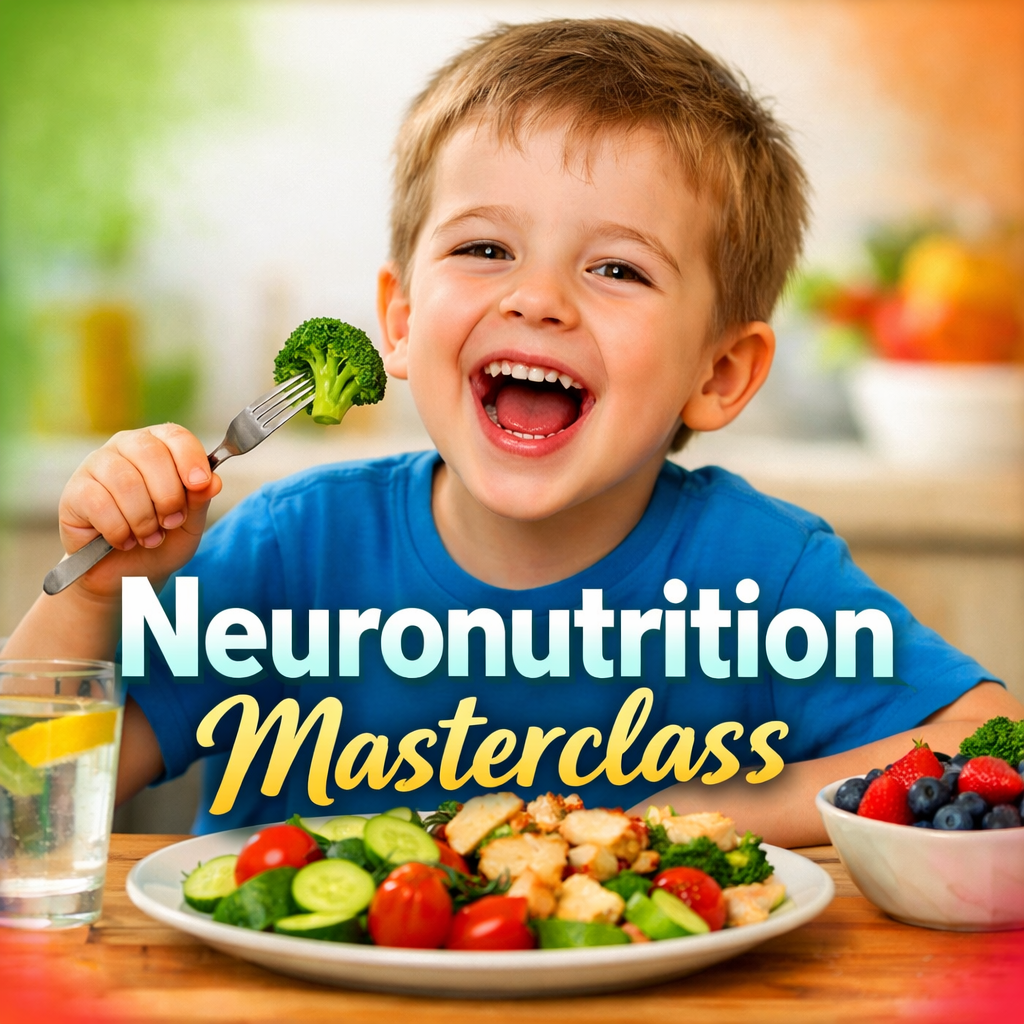
Neuro Nutrition For Picky Eaters..
Without Bribery
Without Meltdowns
Without Spending hours in the kitchen
With Natalie Pelto Brain Development Nutritional Specialist
Without Meltdowns
Without Spending hours in the kitchen
With Natalie Pelto Brain Development Nutritional Specialist
When: Monthly
Where: Live Webinar (I'll provide link)
Why: Because your family needs it!
Registration is limited!
When the Brain Hits Its Circuit Breaker
There’s a moment most autism parents can pinpoint — even if they didn’t have language for it at the time.
Before that moment, eating was limited… but possible.
After it, everything changed.
It’s like the brain’s motherboard suddenly lost power.
Foods that were once tolerated become non-negotiable.
Textures feel louder.
Smells feel threatening.
Meltdowns appear out of nowhere.
And everyone starts talking about behavior.
But what’s actually happening is biological overload.
When the brain runs out of usable fuel, it doesn’t ask politely.
It flips a switch.
And once that switch flips, the system goes into protection mode:
• Narrow the foods
• Reduce sensory input
• Preserve energy
• Survive
That’s why therapy can continue…
while eating gets worse.
That’s why “just keep offering it” backfires.
And that’s why so many brilliant, capable parents feel like they’re watching their child disappear behind meltdowns and beige plates.
Here’s the part no one connects for you
You can’t expand food after the brain has shut itself down.
You have to understand what tripped the breaker first.
Until then, every well-intentioned strategy fights the system instead of supporting it.
In This Free Web Class
I’m going to show you:
• what actually causes the “circuit breaker” moment
• why some kids get stuck there — and others don’t
• what has to come before food expansion can work
• and what changes when the brain finally has enough fuel to come back online
No pressure.
No forcing.
No fighting your child’s nervous system.
Just a framework that explains what you’ve been living.
If you’ve ever thought:
“It’s like something in my child just shut off…”
You’re not imagining it.
👉 Join me for the free class.
This is the missing explanation most parents never get — and the reason everything else finally starts to make sense.
This class is for you if...

Here’s What You’ll Walk Away With (Even If Your Kid Only Eats 5 Foods Right Now)
HERE'S HOW THIS CLASS WILL HELP
🧠 The Real Reason Your Child is Stuck
Learn why picky and sensory eating in autism isn’t behavioral—it’s biological, and what that means for real progress at the table.
🍽 The First Foods That Actually Work
Find out how to begin feeding the brain—using familiar foods your child already eats—with 10% shifts that feel safe and doable.
👩👦 A Plan That Makes You Feel Like the Expert Again
You’ll leave knowing exactly where to start—without waiting for another therapy referral or hoping your child “grows out of it.”
😵💫 Why Feeding Therapy Might Be Missing the Point
We'll explore how feeding therapy focuses on behavior—but misses the root nutritional and sensory drivers of picky eating in autism.
📉 What to Stop Doing Right Now (That’s Making Things Worse)
From hidden food triggers to well-meaning mistakes, learn what might be secretly worsening your child’s food refusal and sensory issues.
🧩 How This All Fits Together Without Overwhelm
You’ll see how brain, gut, and behavior connect—and why a small, step-by-step approach is more effective than trying everything at once.
Not sure you can do this? I've got a story for you...
- I used to think picky eating was just a phase.
- My son ate five things—and none of them had color. I was told to “just keep offering,” “try ABA,” or “sneak veggies in.”
- We spent thousands on therapy, supplements, and feeding specialists.
- But every meal felt like walking into a warzone—with a kid who was exhausted, wired, and still not speaking.
- And then it hit me:
- You can’t out-therapy a starving brain.
- I stopped throwing spaghetti at the wall and started using food strategically—not perfectly, but consistently.
- That’s when everything changed.
- The meltdowns started to fade.
- He tried his first new food.
- Then came the eye contact.
- Then the words.
- Not overnight.
- But over time—because I finally had a map.
- You don’t need to be a nutritionist.
- You don’t need to have it all together.
- You just need the right tools, the right support, and a system that actually works for our kids.
So... are you in?
©2022 company name. All Rights Reserved.